
India has over 50 GI-tagged textile traditions. Each one represents centuries of accumulated knowledge — weaving techniques passed from parent to child, dye recipes that belong to a single village, loom structures that exist nowhere else on earth. And yet, most of these traditions are in decline. Not because the craft is irrelevant, but because the market has failed the craftsperson.
Phalguna was founded on a single conviction: that the solution is not charity, it is commerce done honestly. When a buyer pays a fair price for a genuine GI-tagged saree from a verified weaver, no subsidy is needed. The craft sustains itself. The weaver teaches the next generation. The tradition lives.
Why GI, Why Now
The Geographical Indication tag is India's most under-utilised tool for craft preservation. Brands like Champagne and Parmigiano-Reggiano have used GI protection to build global premium markets worth billions. Indian handloom has the same legal framework and infinitely richer craft heritage — yet the tag remains largely invisible to buyers.
Phalguna exists to change that. Every product we source carries a traceable GI origin. Every weaver we work with is part of a registered cluster. We do not source from wholesalers. We do not sell power-loom imitations. The GI tag on a Phalguna saree means exactly what it says.
“We do not sell sarees. We sell the right of a master weaver to be paid fairly for work that took a lifetime to learn.”
The Clusters We Work With
Phalguna sources from some of India's most celebrated weaving clusters — Chanderi and Maheshwar in Madhya Pradesh, Varanasi in Uttar Pradesh, Kanchipuram in Tamil Nadu, and more. In each cluster, we maintain direct relationships with weaver families, visiting regularly to understand what they are making, what they need, and what the market is not yet seeing.
- ◆Chanderi, Madhya Pradesh — gossamer silk-cotton weaves with century-old motifs.
- ◆Maheshwar, Madhya Pradesh — reversible-border sarees born under Rani Ahilyabai Holkar.
- ◆Varanasi, Uttar Pradesh — Banarasi silk with real zari, the crown of Indian bridal textiles.
- ◆Kanchipuram, Tamil Nadu — temple-city silk with interlocked borders woven by hand.
Present at the Conversation
Our commitment to the GI ecosystem goes beyond sourcing. Phalguna has been an active voice at some of India's most significant policy and trade platforms — participating in national conferences, international exhibitions, and industry award ceremonies that recognise contributions to the MSME and craft sector.
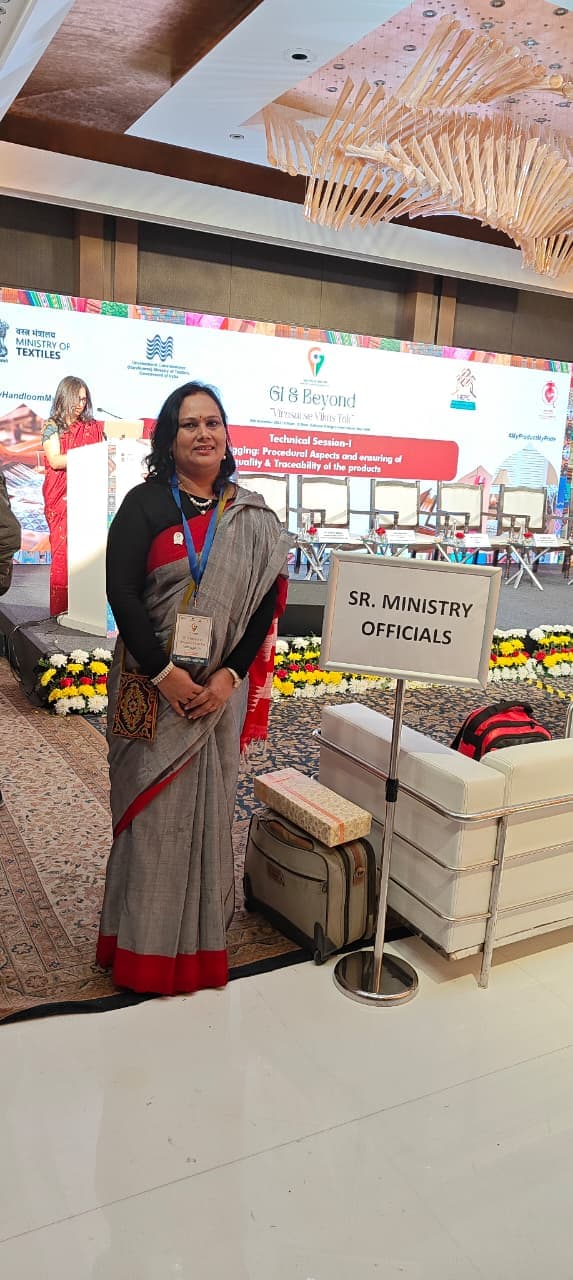
At the Ministry of Textiles' national conference GI & Beyond: Virasat se Vikas Tak (Hotel Oberoi, New Delhi, November 2024), Phalguna participated in technical sessions on GI tagging procedures, quality standards, and traceability — deliberations that directly shape how India's handloom heritage is protected at a policy level.
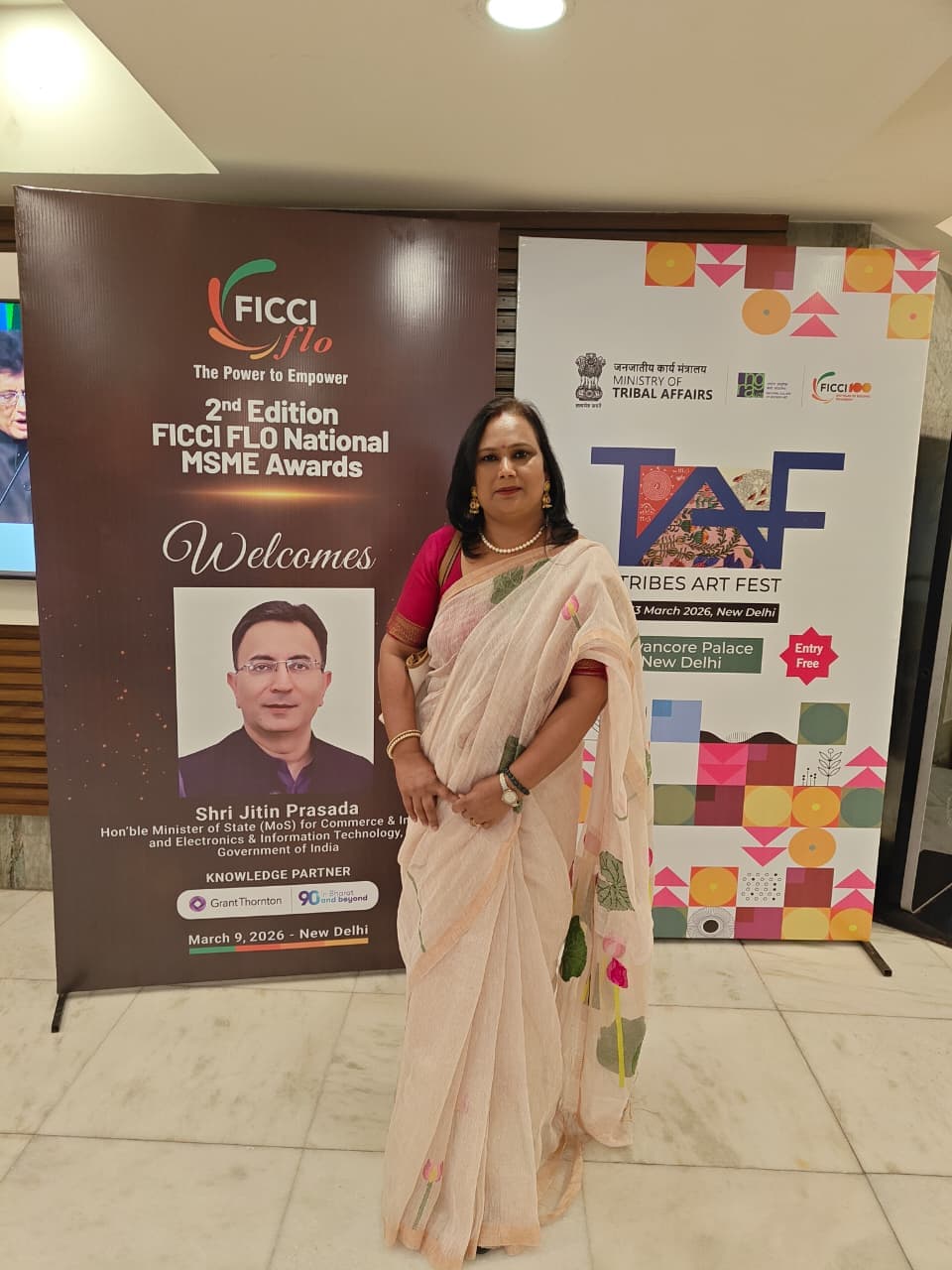
In March 2026, Phalguna was recognised at the FICCI FLO 2nd Edition National MSME Awards in New Delhi — a ceremony chaired by Shri Jitin Prasada, Hon'ble Minister of State for Commerce & Industry and Electronics & Information Technology, Government of India. The award acknowledges Phalguna's contribution to preserving GI-tagged craft traditions through sustainable, market-driven commerce.
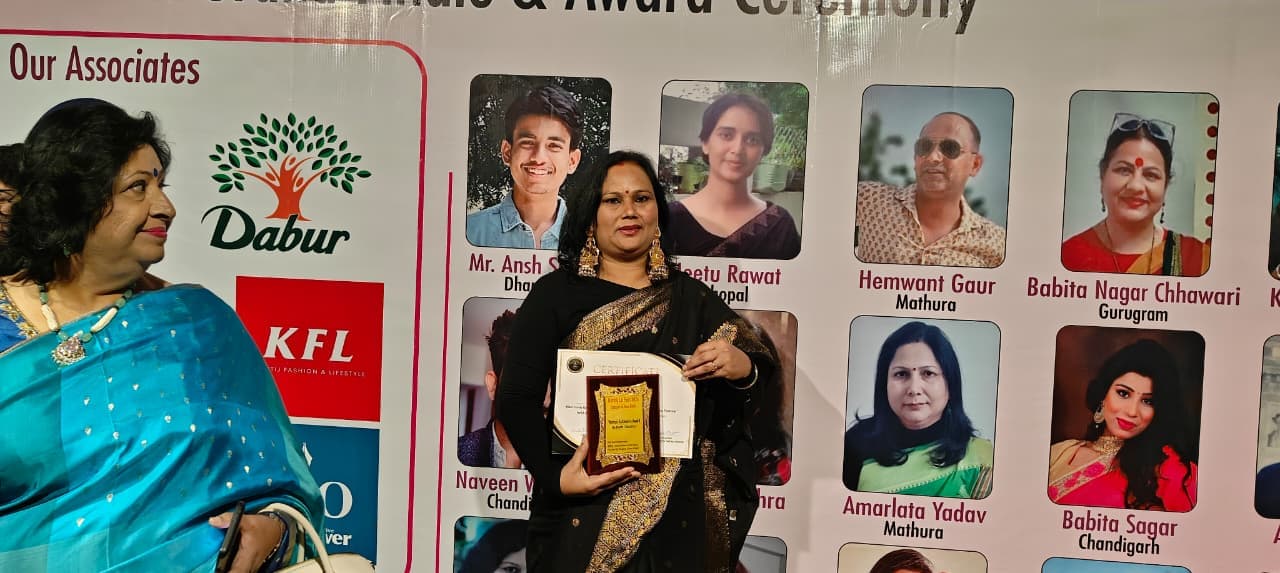
Taking India's Craft to the World
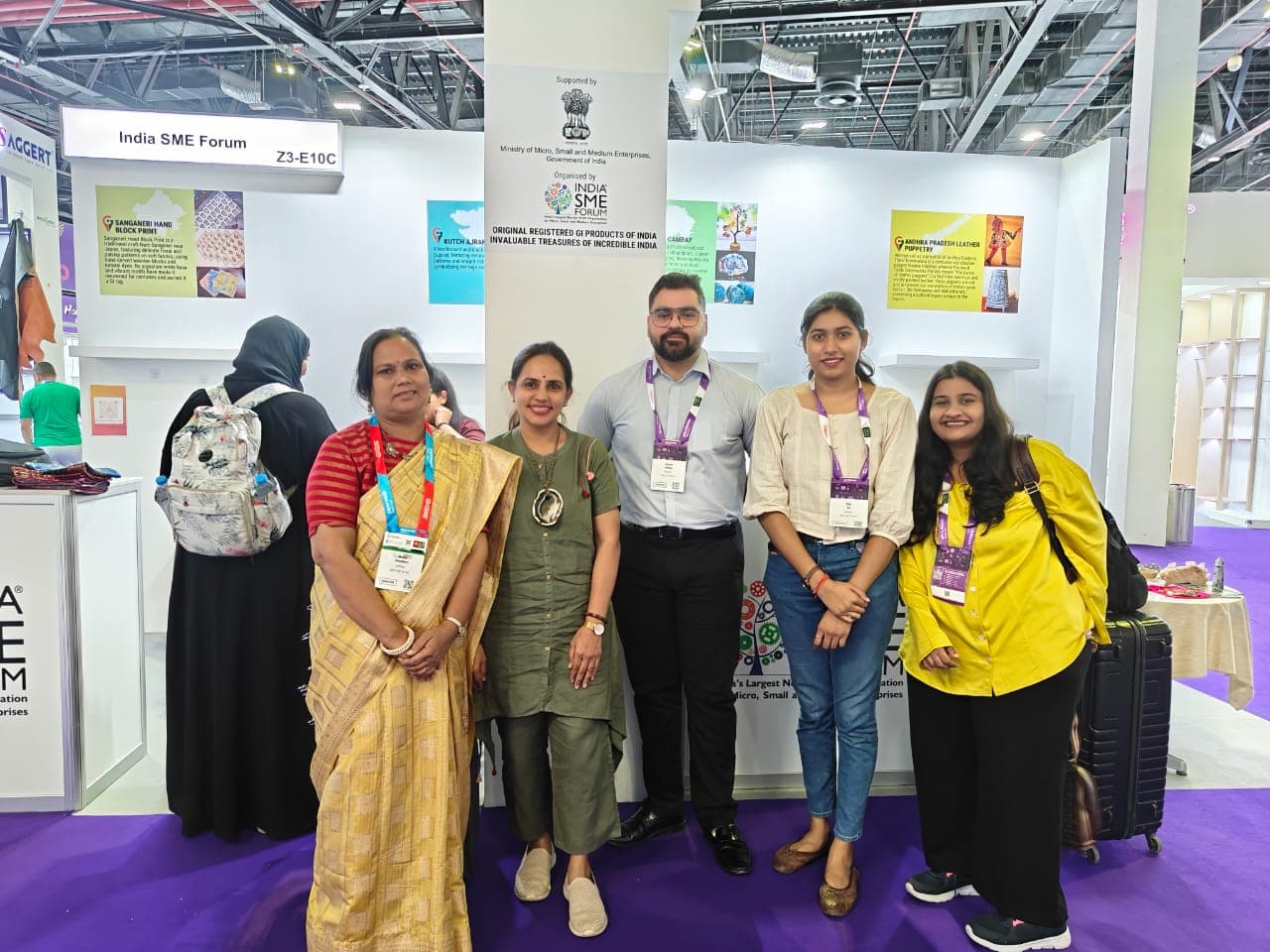
Phalguna has represented India's GI-tagged craft traditions on international stages, including the India SME Forum's exhibition of Original Registered GI Products of India — supported by the Ministry of Micro, Small and Medium Enterprises. Standing alongside craftspeople from across India, Phalguna presented handloom as what it is: not ethnic wear, but world-class textile artistry.
From intimate exhibitions in London and Dubai to national award platforms in New Delhi, Phalguna carries the same message everywhere: India's handloom heritage is not a museum exhibit. It is a living, breathing set of communities that produce the most technically complex and culturally rich textiles in the world. And they deserve a market that honours that.
“India's handloom heritage is not a museum exhibit. It is a living, breathing set of communities that produce the most technically complex and culturally rich textiles in the world.”